
The SHS&S guest of honor: the main caregiver
Two Different Caregivers, Two Different Roles, Two Different Types of Training
SHS&S trains the main, or primary, family caregiver. Traditional caregiving agencies train the caregivers they staff. Both are vitally important, neither replaces the other, and they complement each other.
Why agencies sometimes ask whether SHS&S duplicates their training
Many traditional caregiving agencies that train caregivers are confused when we explain that our services are designed to train the main caregiver, and some wonder whether we are duplicating the training they already provide. That's because we haven't always made one thing clear: even though SHS&S and traditional caregiving agencies both provide caregiver training, we are training two different caregivers for two different responsibilities. Both are vitally important, and neither replaces the other. In fact, they are both needed and can complement each other.
| Traditional caregiver | Main (primary) family caregiver | |
|---|---|---|
| Who | Hired or assigned to provide care, through an agency or independently. | The family member responsible for a spouse, adult child, or parent who may need total care. |
| Hours | Scheduled shifts. When the shift ends, they can usually leave those responsibilities behind until the next one. | The shift never ends. Care continues day and night. |
| Role | Assigned caregiving during their hours, and relief for the primary family caregiver. | Oversees the entire caregiving situation, often alone and without a support team. |
| Training | Provided by the agency, which remains responsible for its employees' training and services. | SHS&S's four-week program: downloadable materials, videos, and a personalized Plan of Care Manual. |
SHS&S trains the main (primary) family caregiver
This is the person responsible for caring for a spouse, adult child, or parent who may need total care. Our four-week program includes downloadable materials and videos. We help the main caregiver create a personalized Plan of Care Manual so everyone involved understands the person's individual care needs, instructions, and routines. We also help the main caregiver organize a support system that includes identifying additional caregivers who can provide regular breaks, to minimize or prevent burnout.
Where do additional caregivers come from?
Because a main caregiver cannot provide care around the clock, they need breaks. SHS&S helps families and caregivers identify and organize that relief, which includes finding additional caregivers and community resources, because many families cannot afford full-time help through agency services. Some can afford part-time help, for example 20 to 30 hours a week. That's the reason we refer them to employment websites such as Indeed or ZipRecruiter, or to traditional caregiving agencies that provide trained workers for assigned days and hours. The whole point is that the main caregiver must have consistent weekly breaks from additional caregivers to prevent burnout.
How and why should SHS&S and traditional caregiving agencies work together?
Just as a new mother prepares her home for a baby, SHS&S helps prepare and stabilize the main family caregiver in much the same way. But once the mother returns to work, she will need a sitter to provide additional care. Although the sitter knows how to care for a baby, it is the mother who knows the baby and has to explain the baby's individual needs and household routines.
It's similar in caregiving. SHS&S helps families and main caregivers organize the person's care needs, and helps stabilize and support that caregiver like a new mother. Now the family can identify and arrange for additional caregivers, who will learn the patient's individual needs, home environment, and routines. Those additional caregivers provide their assigned hours and days, which gives the main caregiver predictable time away. And when these additional caregivers come from agencies, it is the agency, not SHS&S, that remains responsible for their training and services as its employees.
How SHS&S maintains continuity
SHS&S continues supporting the main caregiver after our stabilization program through an operating system that helps monitor the progress of individual caregivers using our services. The operating system produces monthly, quarterly, and yearly reports for SHS&S as proof of the benefit of our services for individual caregivers. While the agency manages its additional caregivers (its employees), together they help families create a more organized and sustainable caregiving arrangement.
Why SHS&S exists: supporting the main caregiver
A main caregiver may suddenly become responsible for an aging parent, spouse, or family member with no time to prepare, no training, no support system, and no money for agency help. These new responsibilities and this "new norm" can consume their lives, causing them to neglect their own health until they become exhausted, burned out, and operate on autopilot just to keep up. With progressive conditions such as Alzheimer's and Parkinson's, care needs may continue to increase.
This is the problem SHS&S was created to help prevent: stabilizing, training, and supporting the main family caregiver so they can organize care, prepare family support, and establish routines and backup plans. None of us should expect a caregiver to sustain the care of another person while overlooking their own health and well-being. Just as we would not trust putting a vehicle on the road for a long trip with the check-engine light on, at SHS&S we support the caregiver so they can continue supporting the person who depends on them.
That is why we call the main caregiver the Guest of Honor of SHS&S.
When the main caregiver joins the traditional caregiver
As we've discussed, SHS&S does not provide hands-on caregiving or staffing services. Our program is designed to focus on caregivers and families who cannot afford support through traditional caregiving agencies, so we can help support them through our 4 to 6 week caregiver stabilization program. Since we do not provide hands-on caregiving or staffing, some of the avenues we encourage main caregivers to explore for additional caregivers are job-recruiting websites like Indeed and ZipRecruiter, and traditional caregiving agencies that already staff and train caregivers.
But we must first support the main caregiver, to make sure this caregiver has everything they need so they won't compromise their health and well-being while taking care of others. This must take place because there are two people in this caregiving journey, not just the patient, and the caregiver needs back-up. Even though additional caregivers from traditional agencies will care for the patient's needs, they are there as back-up because the main caregiver needs a break, much like a babysitter for the mother.
The main caregiver needs immediate support from additional caregivers
During our four-week training, in weeks 1 and 2, the main caregiver needs to find additional caregivers as soon as possible so they can start supporting the main caregiver right away as they go through the unique training of SHS&S. This is where ZipRecruiter, Indeed, or other traditional caregiving agencies can provide their services to support these caregivers who will now be stabilized.
Now the traditional agencies (acting in the role of a sitter service for the mother going back to work) can provide additional caregivers. These caregivers become familiar with the individual needs, household environment, routine, and care instructions, carry out the family's identified need for consistent assistance and relief, and follow the instructions outlined by SHS&S.
All information about each caregiver using our services is uploaded into our operating system by SHS&S staff. The operating system is not for use by outside agencies or their employees. Its purpose is for SHS&S to have tangible proof that the main caregiver was able to find a reliable support system of additional caregivers. Since SHS&S is not a staffing agency and does not provide additional caregivers, it is the responsibility of the main caregiver to find their own caregivers.
SHS&S collaborates with a variety of agencies, not just traditional caregiving agencies
This information has focused on how we can work with traditional caregiving agencies, which are just one of many types of agencies we collaborate with. For example, our services are available to medical and non-medical healthcare communities, which can include hospitals, rehabilitation centers, home healthcare and traditional caregiving agencies, senior and memory care, community organizations, care support groups, and organizations serving individuals with significant care needs. The purpose of collaborating is to help caregivers have as many invaluable resources as possible to support and protect them during their caregiving journey.
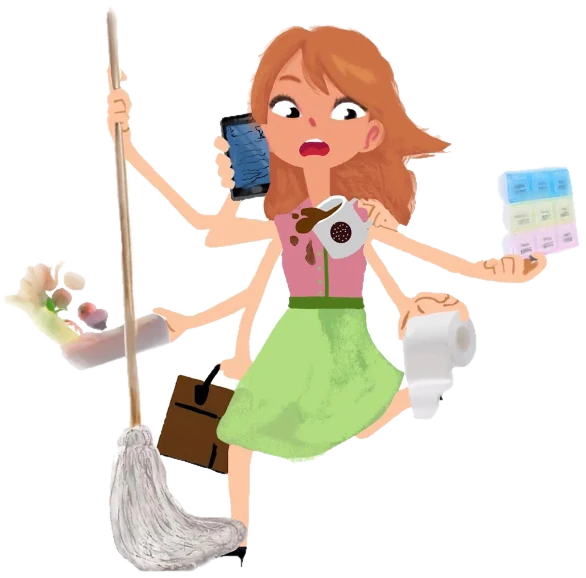
Next step
Follow the main caregiver's journey
Now that you understand there are two different caregivers, two different roles, and two different types of training that complement each other, follow the main caregiver's journey. You'll see when it begins, who these caregivers are, where they can be found, and what happens with their "new norm" after the journey begins, which leads to the question: what is the missing piece? What does a caregiver need to prevent burnout?
Quick answers
Common questions from agencies and families
A traditional caregiver provides scheduled assistance during assigned hours, either through an agency or independently, and can usually leave those responsibilities behind when the shift ends. A primary (main) family caregiver is the family member responsible for a spouse, adult child, or parent who needs total care, and for overseeing the entire caregiving situation, day and night, often alone.
No. SHS&S and traditional caregiving agencies both provide caregiver training, but for two different caregivers and two different responsibilities. SHS&S trains the main family caregiver; agencies train the caregivers they staff. Both are needed and can complement each other.
Because a main caregiver cannot provide care around the clock, SHS&S helps families identify and organize relief, including additional caregivers and community resources. Families who can afford part-time help are referred to employment websites such as Indeed or ZipRecruiter, or to traditional caregiving agencies that provide trained workers for assigned days and hours.
When additional caregivers come from an agency, it is the agency, not SHS&S, that remains responsible for their training and services as its employees. SHS&S is not a staffing agency and does not provide additional caregivers.